
Introduction
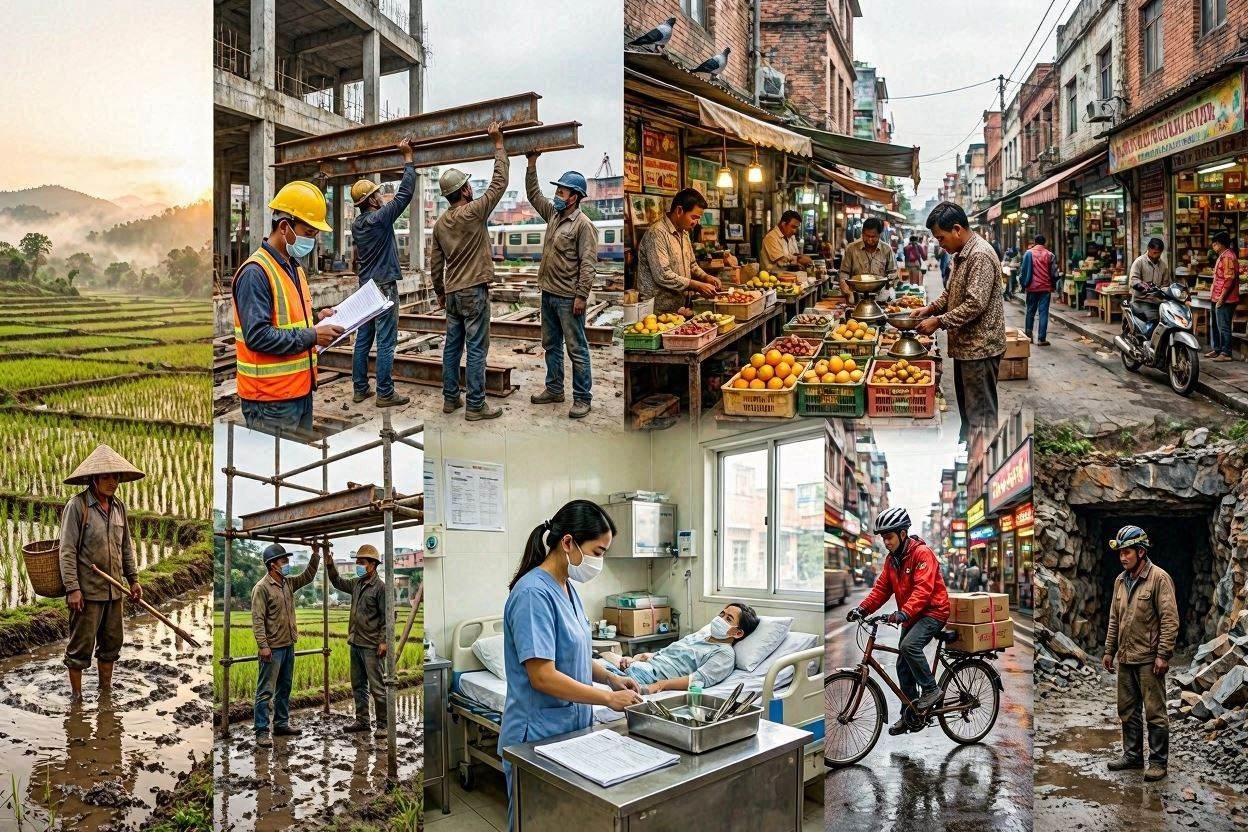
Across the world, millions of people work every day in different labour professions to support their families, communities, and nations. Labour professions are the foundation of human society because they provide essential services, produce goods, build infrastructure, and help countries develop. From farmers working in fields to construction workers building cities, every labour profession has an important role in shaping the world.
Although jobs and working conditions vary from country to country, the dedication and effort of workers remain a common force that connects humanity. Labour professions represent determination, skill, responsibility, and the desire to create a better future.
Farmers: The Providers of Food
Agriculture is one of the oldest and most important labour professions in the world. Farmers work hard to grow crops, raise animals, and produce food that feeds billions of people. In countries where agriculture is a major part of the economy, farmers spend long hours caring for their land and adapting to changes in weather and technology.
From rice farmers in Asia to wheat growers in Europe and fruit producers in the Americas, agricultural workers play a vital role in ensuring food security. Without their efforts, the world would struggle to meet the basic needs of its population.
Construction Workers: Building the World
Construction workers are responsible for creating the physical structures that make modern life possible. They build houses, schools, hospitals, bridges, roads, and skyscrapers. Their work requires physical strength, technical knowledge, and careful attention to safety.
As cities continue to grow around the world, construction workers remain essential in developing urban areas and improving living conditions. The buildings and infrastructure people use every day are the results of their hard work.
Factory and Manufacturing Workers: Creating Products
Manufacturing workers help produce many of the goods people use daily, including clothing, electronics, vehicles, tools, and household items. Factories around the world depend on skilled and hardworking employees who operate machines, assemble products, and maintain quality standards.
Countries with strong manufacturing industries often rely on these workers to support economic growth and international trade. Their contribution helps connect different parts of the world through global production networks.
Healthcare Workers: Serving Humanity
Healthcare labour professionals, including nurses, medical assistants, laboratory workers, and support staff, provide essential services that protect human health. They work in hospitals, clinics, and communities to care for patients and improve people's quality of life.
Healthcare workers often face challenging situations and require patience, knowledge, and compassion. Their dedication becomes especially important during health emergencies when communities depend on their skills and commitment.
Teachers and Educational Workers: Building Future Generations
Education workers play a major role in developing societies. Teachers, instructors, and school staff help children and adults gain knowledge and skills that prepare them for the future.
Although teaching is often considered a professional career, it is also a form of valuable labour that requires dedication and continuous effort. By educating people, teachers contribute to innovation, economic progress, and social development.
Transportation and Delivery Workers: Connecting the World
Transportation workers keep societies connected by moving people and goods from one place to another. Drivers, pilots, sailors, railway workers, and delivery professionals ensure that products reach markets and people can travel safely.
In the modern global economy, transportation labour is essential for trade and communication. The availability of goods in stores and homes often depends on the efforts of these workers.
Cleaners and Maintenance Workers: Protecting Public Spaces
Cleaning and maintenance workers perform tasks that are necessary for healthy and organized communities. They keep homes, offices, schools, hospitals, and public areas clean and safe.
Although their work is sometimes overlooked, these workers make a significant contribution to public health and comfort. A clean environment allows societies to function effectively.
Skilled Trades and Technical Workers
Skilled labour professions such as electricians, plumbers, mechanics, technicians, and machine operators are important in both developed and developing countries. These workers use specialized knowledge to repair, maintain, and improve essential systems.
Modern societies depend on skilled workers to keep technology, industries, and public services operating smoothly. Their expertise is valuable in solving practical problems and supporting innovation.
Challenges Faced by Labour Workers
Despite their importance, many labour workers around the world face challenges such as low wages, unsafe working conditions, long working hours, and limited access to education and training. Many workers also experience difficulties due to economic changes and increasing demands in their industries.
Improving workers' rights, providing fair opportunities, and ensuring safe workplaces are necessary steps toward creating a more equal and sustainable world.
The Future of Labour Professions
The world of work is constantly changing because of technology, automation, and globalization. Some traditional jobs are transforming, while new professions are emerging. However, human labour will always remain important because creativity, decision-making, and skills are essential for progress.
Future workers will need education, training, and adaptability to succeed in a changing environment. Respect for all professions will continue to be important as every worker contributes to the development of society.