
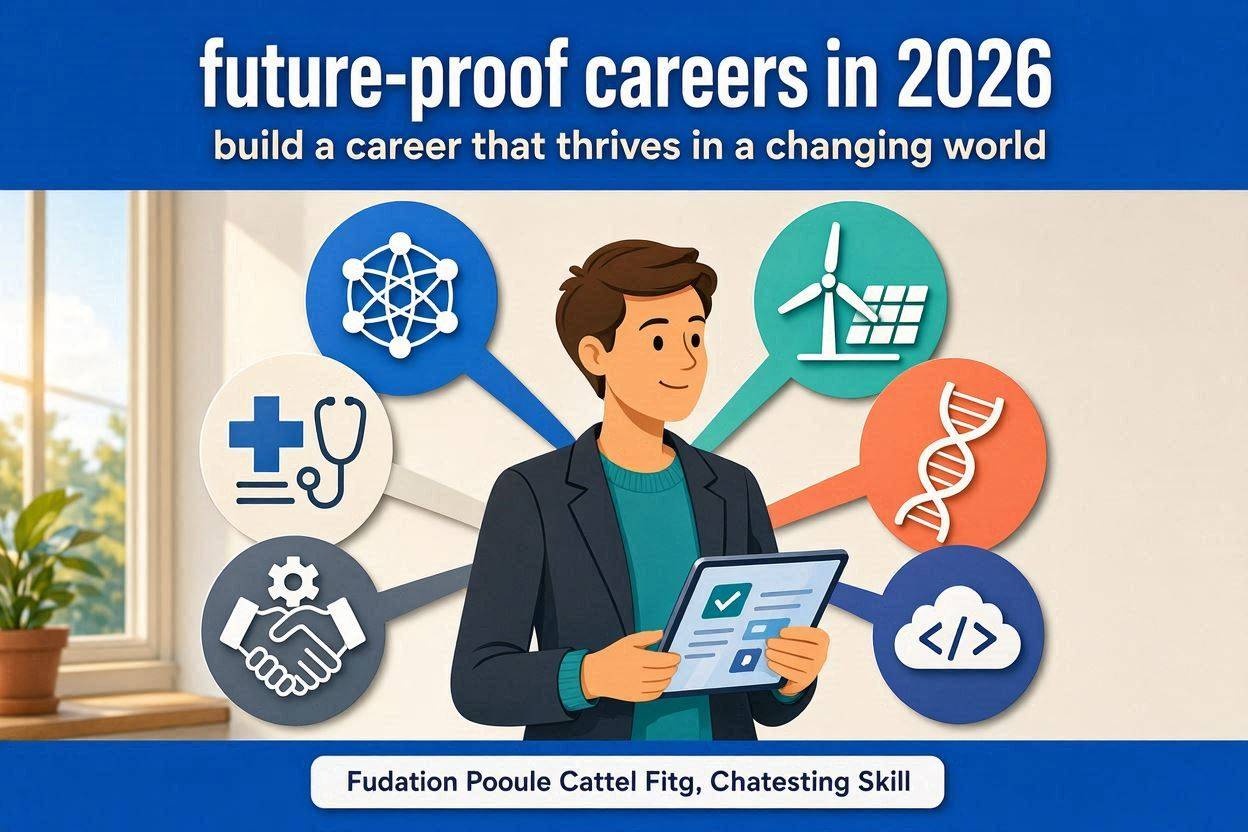
Introduction
Technology, artificial intelligence (AI), automation, and global economic shifts are transforming the job market faster than ever. While some roles are becoming automated, many careers continue to grow because they require technical expertise, creativity, critical thinking, or human interaction.
If you're planning your future or considering a career change, choosing a future-proof career can provide greater job security, higher earning potential, and long-term growth opportunities.
This guide explores the best future-proof careers in 2026, why they are in demand, required skills, salary expectations, and how to prepare for success.
What Is a Future-Proof Career?
A future-proof career is a profession that is expected to remain valuable despite advances in technology and changes in the economy. These careers typically have:
High market demand
Strong job security
Opportunities for career growth
Competitive salaries
Continuous need for skilled professionals
Resistance to full automation
Future-proof careers often combine technical knowledge with problem-solving, communication, and adaptability.
Why Future-Proof Careers Matter
Choosing a career with long-term demand can help you:
Increase job security
Earn higher salaries
Adapt to changing technologies
Access global job opportunities
Reduce the risk of automation
Build long-term career stability
Develop transferable skills
Investing in in-demand skills today can create more opportunities in the years ahead.
Top Future-Proof Careers in 2026
1. Artificial Intelligence (AI) Specialist
Average Salary: $90,000–$180,000+ per year
AI specialists develop intelligent systems used in healthcare, finance, manufacturing, education, and countless other industries.
Key Skills:
Machine learning
Python programming
Data analysis
Deep learning
AI model development
2. Cybersecurity Analyst
Average Salary: $80,000–$150,000 per year
As cyber threats increase, organizations need professionals who can protect systems, networks, and sensitive information.
Responsibilities include:
Threat detection
Security monitoring
Risk assessment
Incident response
Compliance management
3. Data Scientist
Average Salary: $95,000–$170,000 per year
Data scientists help organizations make informed decisions by analyzing large datasets and uncovering valuable insights.
Industries hiring data scientists include:
Healthcare
Finance
Retail
Manufacturing
Government
Technology
4. Software Developer
Average Salary: $80,000–$160,000 per year
Software developers create websites, mobile applications, enterprise systems, and cloud-based platforms that power modern businesses.
Popular specialties include:
Web development
Mobile app development
Cloud engineering
Full-stack development
DevOps
5. Healthcare Professional
Average Salary: Varies by role and specialization
Healthcare continues to expand due to aging populations, medical innovation, and increasing demand for quality care.
Examples include:
Registered nurses
Physicians
Medical laboratory technologists
Physiotherapists
Radiology technicians
Healthcare careers combine strong demand with meaningful work.
6. Renewable Energy Technician
Average Salary: $55,000–$110,000 per year
The transition to clean energy is creating opportunities in:
Solar panel installation
Wind turbine maintenance
Battery storage systems
Energy efficiency consulting
These careers support sustainable development while offering strong growth potential.
7. Digital Marketing Specialist
Average Salary: $50,000–$120,000 per year
Businesses increasingly rely on digital channels to reach customers, making skilled marketers highly valuable.
In-demand areas include:
Search Engine Optimization (SEO)
Content marketing
Social media marketing
Email marketing
Paid advertising (PPC)
Marketing analytics
8. Cloud Computing Engineer
Average Salary: $100,000–$180,000 per year
Cloud engineers build, manage, and secure cloud infrastructure for organizations worldwide.
Popular cloud platforms include:
Amazon Web Services (AWS)
Microsoft Azure
Google Cloud Platform (GCP)
Cloud expertise remains one of the most sought-after technical skills.
9. Robotics Technician
Average Salary: $60,000–$120,000 per year
Automation continues to expand across manufacturing, logistics, healthcare, and agriculture.
Robotics technicians:
Install robotic systems
Perform maintenance
Troubleshoot equipment
Improve production efficiency
10. Skilled Trades Professional
Average Salary: Varies by trade and experience
Many skilled trades remain difficult to automate because they require hands-on expertise and on-site problem-solving.
Examples include:
Electricians
Plumbers
HVAC technicians
Welders
Industrial maintenance technicians
These careers continue to offer excellent job security and competitive pay.
Skills That Will Stay Valuable
No matter your profession, employers increasingly value:
Technical Skills
Digital literacy
Data analysis
Artificial intelligence tools
Cloud computing
Cybersecurity awareness
Automation technologies
Project management
Human Skills
Critical thinking
Communication
Creativity
Emotional intelligence
Leadership
Adaptability
Teamwork
Problem-solving
Combining technical and interpersonal skills can make you more resilient in a changing job market.
How to Prepare for a Future-Proof Career
Follow these steps:
Identify industries with long-term growth.
Learn in-demand technical skills.
Earn professional certifications.
Gain practical experience through internships or projects.
Build a strong portfolio or resume.
Develop communication and leadership skills.
Stay updated with industry trends.
Commit to lifelong learning.
Industries Expected to Grow Beyond 2026
Several sectors are projected to continue expanding:
Artificial intelligence
Cybersecurity
Healthcare
Renewable energy
Cloud computing
Financial technology (FinTech)
E-commerce
Advanced manufacturing
Biotechnology
Education technology (EdTech)
Professionals with relevant skills in these industries are likely to enjoy strong employment opportunities.
Tips for Long-Term Career Success
To stay competitive:
Learn continuously.
Embrace new technologies.
Expand your professional network.
Earn certifications.
Improve communication skills.
Develop leadership experience.
Stay flexible as industries evolve.
Career resilience often depends on adaptability and a willingness to keep learning.
Frequently Asked Questions (FAQs)
What is the best future-proof career in 2026?
There is no single "best" career for everyone. Roles in AI, cybersecurity, software development, healthcare, cloud computing, and skilled trades are among the strongest options due to sustained demand and growth.
Are AI-proof careers guaranteed?
No career is completely immune to technological change. However, careers that combine technical expertise with creativity, judgment, and interpersonal skills are generally more resilient.
Do future-proof careers require a university degree?
Not always. Many skilled trades, technology certifications, and vocational programs can lead to successful, high-paying careers without a traditional four-year degree.