
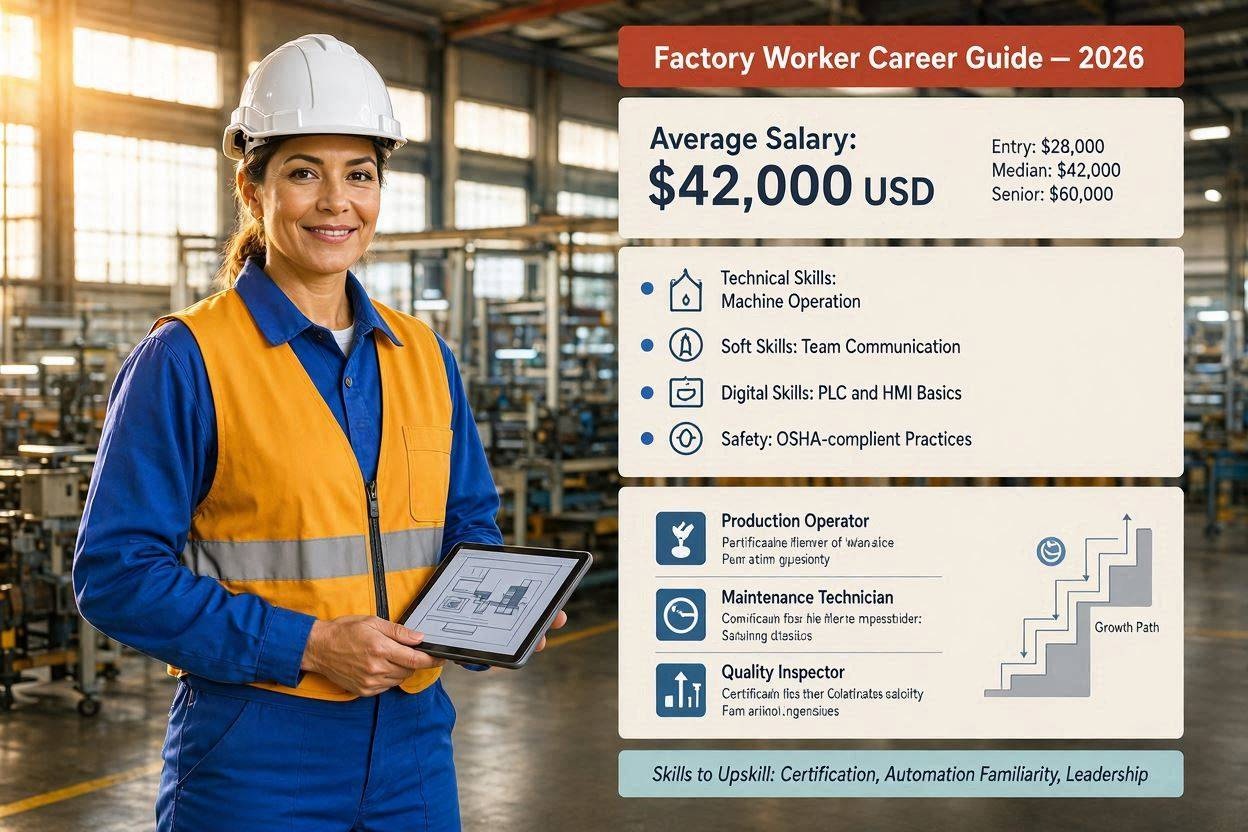
Introduction
The manufacturing industry remains one of the largest employment sectors worldwide, offering thousands of stable job opportunities every year. Whether you're looking for an entry-level position or planning a long-term career in manufacturing, becoming a factory worker can provide excellent job security, competitive wages, and opportunities for career advancement.
In this comprehensive Factory Worker Career Guide, you'll discover job responsibilities, required skills, salary expectations, career growth opportunities, qualifications, and expert tips to help you succeed in today's manufacturing industry.
What Does a Factory Worker Do?
A factory worker is responsible for producing, assembling, packaging, inspecting, and maintaining products in manufacturing facilities. Factory workers play a crucial role in ensuring products meet quality standards while maintaining production efficiency.
Typical daily responsibilities include:
- Operating manufacturing machinery
- Assembling products and components
- Inspecting finished goods for quality control
- Packaging products for shipment
- Maintaining workplace cleanliness
- Following workplace safety procedures
- Reporting equipment malfunctions
- Meeting production targets
- Managing inventory and materials
Factory workers may specialize in industries such as:
- Automotive Manufacturing
- Food Processing
- Electronics Manufacturing
- Pharmaceutical Production
- Textile Manufacturing
- Furniture Production
- Plastic Manufacturing
- Metal Fabrication
- Packaging Industry
Essential Skills Every Factory Worker Needs
Successful factory workers possess both technical and soft skills.
Technical Skills
- Machine operation
- Equipment maintenance
- Assembly line experience
- Quality inspection
- Packaging techniques
- Basic mechanical knowledge
- Inventory handling
- Production reporting
- Forklift operation (where required)
Soft Skills
- Attention to detail
- Time management
- Teamwork
- Communication
- Problem-solving
- Physical endurance
- Adaptability
- Reliability
- Fast learning ability
Educational Requirements
One of the biggest advantages of becoming a factory worker is that many positions require minimal formal education.
Typical qualifications include:
- High school diploma (preferred)
- GED equivalent
- On-the-job training
- Safety certifications
- Forklift certification (optional)
- Manufacturing certifications (advantageous)
Many employers provide paid training for new employees.
Factory Worker Salary in 2026
Factory worker salaries vary depending on location, experience, and industry.
Average Salary Estimates
| Experience | Annual Salary |
|---|---|
| Entry-Level | $28,000 – $35,000 |
| Experienced | $36,000 – $48,000 |
| Skilled Operator | $45,000 – $60,000 |
| Production Supervisor | $60,000 – $85,000 |
Workers who specialize in automation, CNC machining, welding, or industrial maintenance often earn significantly higher salaries.
Types of Factory Worker Jobs
There are many career options within manufacturing, including:
- Assembly Line Worker
- Production Worker
- Machine Operator
- Warehouse Associate
- Packaging Operator
- Forklift Operator
- CNC Machine Operator
- Quality Control Inspector
- Manufacturing Technician
- Food Production Worker
- Textile Worker
- Plastic Manufacturing Operator
- Electronics Assembler
Each role offers different responsibilities and advancement opportunities.
Factory Worker Career Progression
Manufacturing offers excellent career advancement opportunities.
Typical career path:
Factory Worker → Machine Operator → Senior Operator → Team Leader → Production Supervisor → Operations Manager → Plant Manager
Many companies promote employees internally based on performance and experience.
Benefits of Working as a Factory Worker
Factory jobs offer numerous advantages, including:
- Stable employment
- Competitive hourly wages
- Overtime opportunities
- Health insurance
- Paid vacation
- Retirement plans
- Career development programs
- Paid training
- Job security
- Promotion opportunities
Challenges Factory Workers Face
Like any profession, factory work comes with challenges.
Common challenges include:
- Standing for long periods
- Repetitive tasks
- Shift work
- Heavy lifting
- Production deadlines
- Noise exposure
- Temperature-controlled environments
Employers help reduce these challenges through safety equipment, ergonomic practices, and regular training.
Workplace Safety Tips
Safety is a top priority in manufacturing.
Always remember to:
- Wear personal protective equipment (PPE)
- Follow machine safety guidelines
- Report hazards immediately
- Maintain clean workspaces
- Attend safety training sessions
- Follow lockout/tagout procedures
- Use proper lifting techniques
- Stay alert during machine operation
A safe workplace protects both employees and productivity.
Industries Hiring Factory Workers
Factory workers are in demand across numerous industries.
Top hiring sectors include:
- Automotive Manufacturing
- Consumer Goods
- Food & Beverage
- Pharmaceuticals
- Electronics
- Aerospace
- Construction Materials
- Packaging
- Medical Device Manufacturing
- Textile Production
As manufacturing continues to modernize, demand for skilled workers remains strong.
How to Become a Factory Worker
Follow these simple steps:
- Complete high school or obtain a GED.
- Prepare a professional resume.
- Apply for entry-level factory jobs.
- Attend interviews.
- Complete employer training.
- Learn machine operations.
- Develop technical skills.
- Pursue certifications.
- Gain experience.
- Apply for promotions.