
Introducation
Finding skilled blue-collar workers has become increasingly challenging for employers across industries. Construction companies, manufacturing plants, logistics providers, warehouses, and maintenance businesses are all competing for the same pool of qualified talent. As demand grows, organizations need smarter recruitment strategies that not only attract candidates but also encourage them to stay for the long term.
Successful recruitment starts with understanding what today's workforce values. Competitive wages remain important, but workers are also looking for stable employment, safe working conditions, career development, and employers who treat them with respect. Companies that focus on these areas are more likely to attract experienced professionals and reduce costly employee turnover.
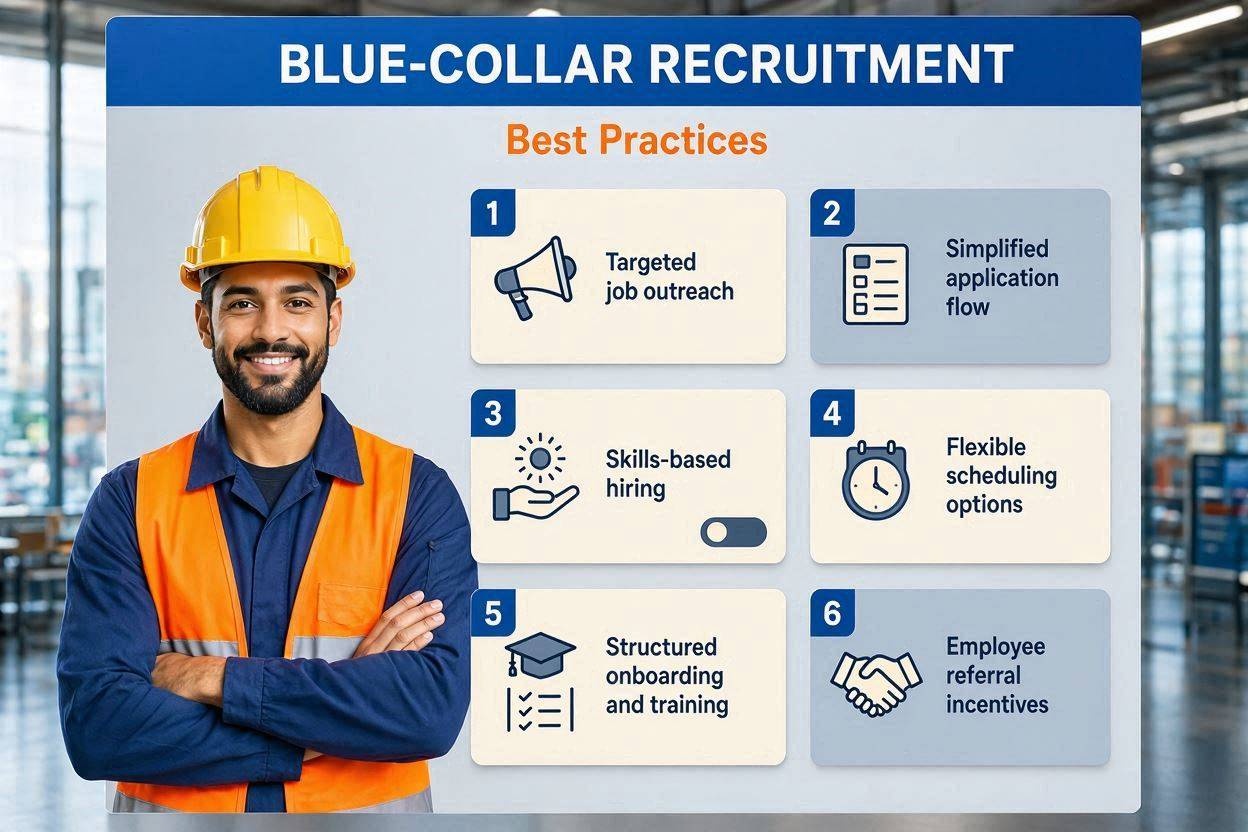
One of the most effective ways to improve hiring results is by creating clear and informative job advertisements. Candidates should immediately understand the role, responsibilities, work schedule, required qualifications, and available benefits. Straightforward job descriptions save time for both employers and applicants while attracting people who are genuinely suited to the position.
Expanding recruitment beyond a single job board can significantly improve hiring outcomes. Posting vacancies across multiple hiring platforms, company websites, social media channels, vocational institutions, and employee referral programs helps employers reach a broader audience. Referral programs are particularly valuable because current employees often recommend dependable workers who are a good fit for the organization.
The application process also plays a major role in attracting candidates. Many blue-collar workers search and apply for jobs using their mobile phones. Lengthy application forms and unnecessary paperwork often discourage qualified applicants before they complete the process. A simple, mobile-friendly application experience allows employers to connect with more candidates while reducing drop-off rates.
Speed has become another critical factor in recruitment. Skilled workers often receive multiple job offers, and long hiring processes can result in losing strong candidates to competitors. Reviewing applications promptly, scheduling interviews without unnecessary delays, and communicating regularly throughout the hiring process helps employers secure top talent before opportunities are lost.
Workplace safety continues to influence employment decisions. Candidates are more likely to join organizations that demonstrate a strong commitment to employee well-being through proper training, safety equipment, and clearly defined workplace procedures. A reputation for maintaining high safety standards also strengthens an employer's brand within the industry.
Investing in employee development is equally important. Rather than focusing solely on experienced candidates, many successful companies hire individuals with the right attitude and provide training to help them develop the required technical skills. Continuous learning opportunities, certifications, and career progression create a workforce that is more productive, engaged, and loyal.
Competitive compensation remains a major attraction, but benefits often make the difference when candidates compare employers. Health coverage, overtime opportunities, paid leave, performance incentives, retirement plans, transportation support, and flexible scheduling contribute to higher employee satisfaction and better retention rates.
Building a positive employer reputation requires consistency. Job seekers increasingly research companies before applying, paying close attention to employee reviews, workplace culture, and growth opportunities. Organizations that communicate openly, recognize employee achievements, and foster a respectful work environment naturally attract more qualified applicants.
Technology has also transformed blue-collar recruitment. Modern applicant tracking systems, automated interview scheduling, digital onboarding, and recruitment analytics allow hiring teams to make faster, more informed decisions while improving the overall candidate experience. These tools reduce administrative work and help recruiters focus on finding the right people instead of managing paperwork.
Recruitment success should not be measured solely by the number of new hires. Long-term performance depends on employee retention, productivity, and workforce stability. Monitoring hiring metrics such as time-to-hire, employee retention, offer acceptance rates, and recruitment costs provides valuable insights that help organizations continuously improve their hiring strategies.
As industries continue to face labor shortages and increasing competition for skilled workers, businesses that prioritize efficient hiring, employee development, workplace safety, and a positive company culture will be in the strongest position to attract and retain top talent. Blue-collar recruitment is no longer just about filling vacancies it is about building a dependable workforce that supports sustainable business growth and long-term success.